Landside vs. waterside: reading a yard split for capacity
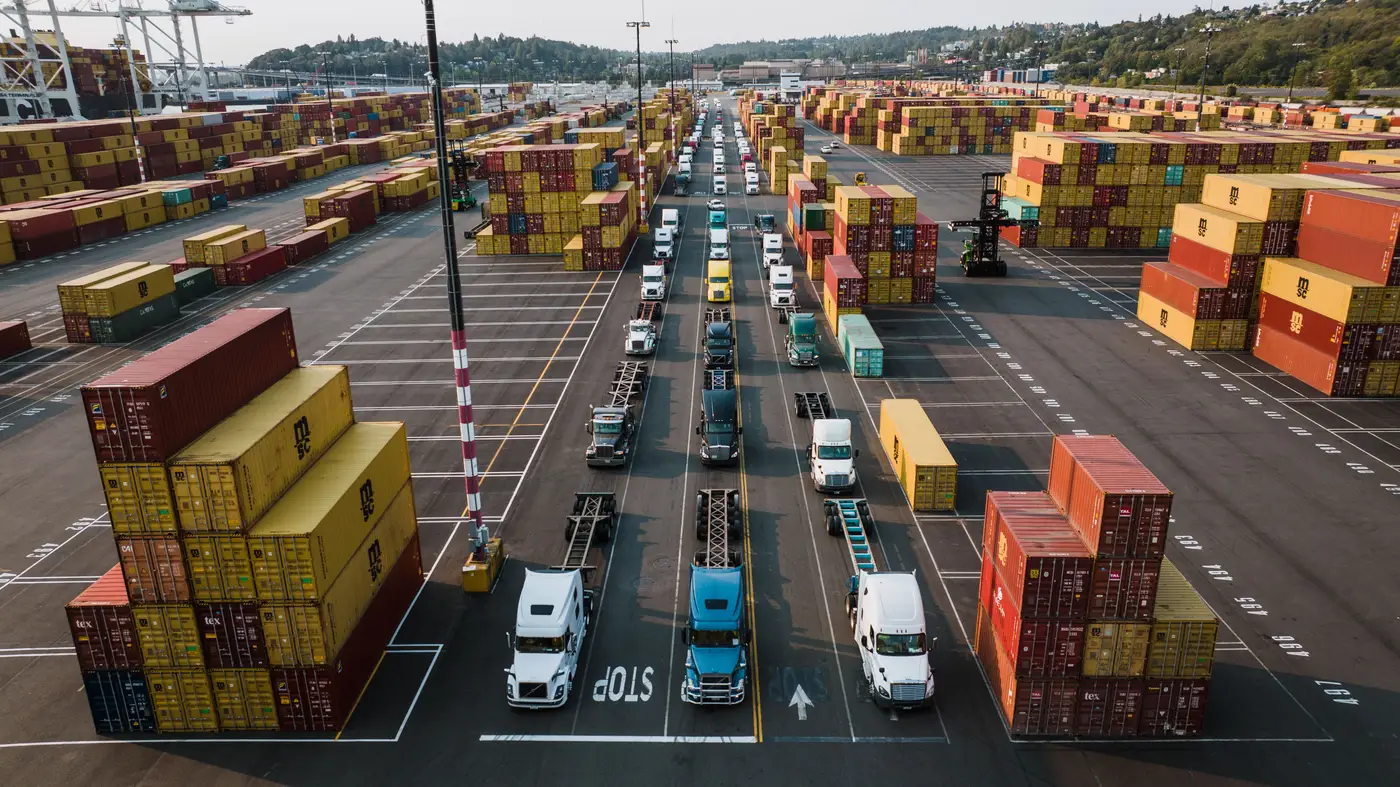
A terminal's yard isn't one undifferentiated field of boxes. Blocks get laid out with a purpose: some rows face the apron and the quay cranes, others sit further back toward the gate and the truck lanes. That split, apron-side versus gate-side, is what people mean when they talk about landside-to-waterside orientation in a yard. It's rarely a labeled field in the TOS. It's just how every yard planner already thinks about the stacks, even if nobody writes it down that way.
What the split describes
Yard block orientation comes from how a terminal routes its two main flows. Waterside flow is vessel work: import boxes coming off a ship, export boxes waiting to go on one. Those blocks sit close to the apron so straddle carriers or RTGs have a short run to the crane. Landside flow is truck and rail: drayage pickups, empty returns, rail transfers. Those blocks sit nearer the gate complex, because that's where the trucks queue.
A block can flip roles between vessel calls. A bay that's waterside-facing during a busy discharge might spend the following week clearing landside pickups once the ship's gone. The physical block doesn't move. What it's doing does.
Why this changes how you read a capacity number
A box count by itself doesn't tell you much without knowing which side of the yard produced it. A full bay in an apron-side block next to a vessel still working is probably just discharge stacking up before planned pulls. A full bay in a gate-side block three rows back, with no vessel alongside, usually means something else: drayage isn't keeping pace, or empty return capacity is maxed out and nobody's told ops yet.
Same number, two different operational stories, depending on where in the yard it sits. A terminal capacity analyst who only has one aggregate TEU figure for the whole yard is stuck guessing which story applies. One who has a count broken out by block, and knows which blocks run apron-side versus gate-side, can tell the difference in about ten seconds.
This also matters for forecasting a congestion call. Waterside stacking usually clears on a known schedule, tied to the next vessel. Gate-side stacking clears on truck availability, which is a messier variable, and the one that bites you on a bad week. If your capacity read lumps both together, you'll miss the gate-side buildup until it's already a queue at the in-gate.
Reading block and bay capacity with the split in mind
Block/bay capacity is usually expressed as a fixed ground-slot count times a stack height assumption, then compared against what's actually sitting there. That number is only useful if you know what the block is for right now. A block nominally rated for six-high stacking that's sitting at four-high waterside, right before a vessel's ETA, isn't underused. It's staged correctly. The same four-high reading in a gate-side block with no truck activity booked is a different situation entirely, and worth a call to whoever's running drayage.
None of this requires a new system. It requires knowing, bay by bay, what's apron-side and what's gate-side, and reading the day's count against that context rather than against one yard-wide average. Terminals that already map their blocks this way tend to catch gate-side congestion a day or two before it shows up as a truck queue, because the stacking pattern shifts before the queue forms.
The hard part in practice is getting a count per block, daily, without waiting on an official monthly release or trying to back it into AIS vessel calls, which tell you nothing about what's happening on the landside half of the yard. A daily box count by block, split out by apron-side and gate-side stacking, is exactly the kind of read Container Counting is built to produce from imagery rather than from whatever the terminal publishes a month later.
If you're trying to catch a gate-side buildup before it's a truck queue, a daily per-block count is the fastest way to see it coming.