What is a container block and bay numbering system?
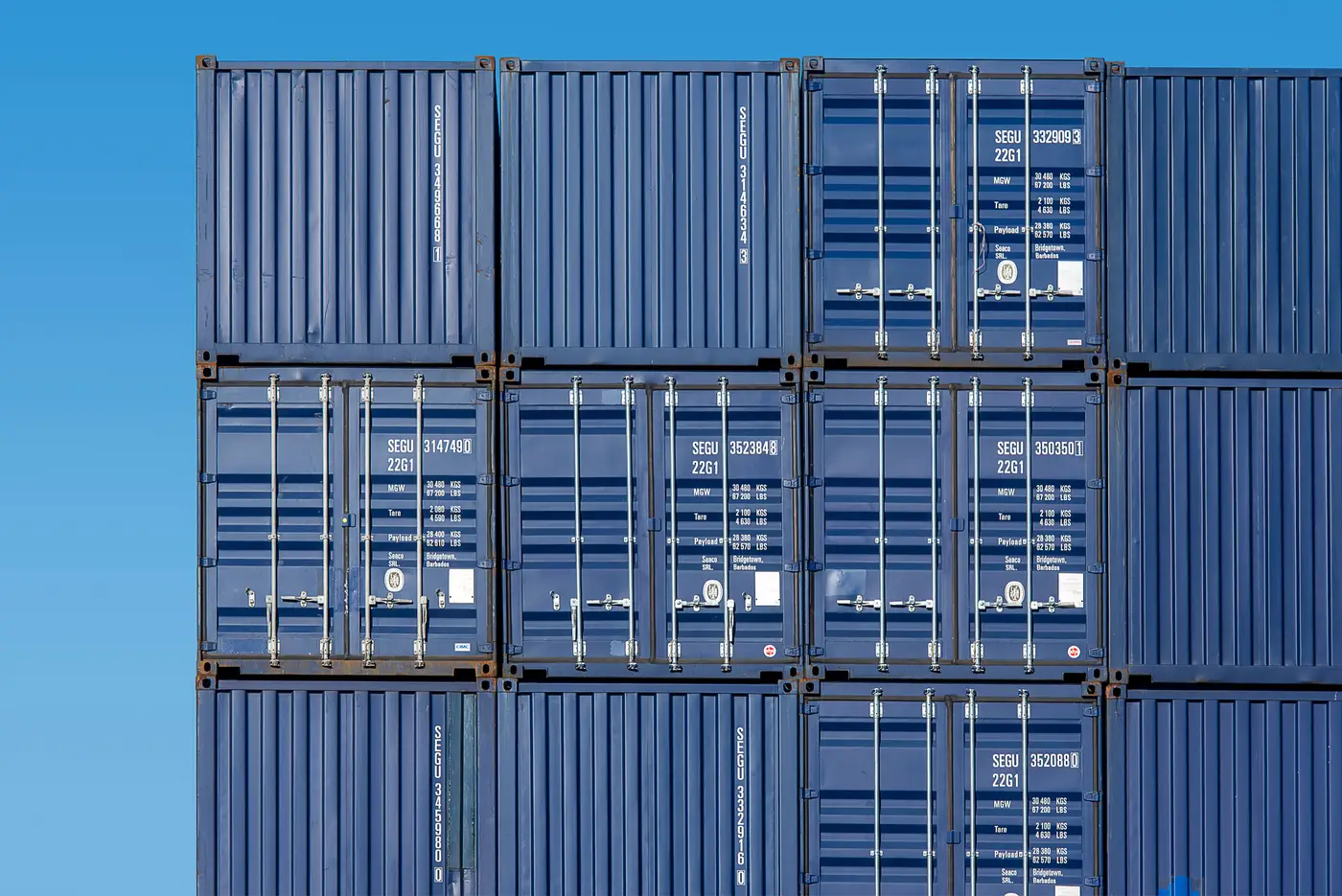
Every container yard runs on a grid, and every grid has an address for every box. Call it a block, call it a stack, the idea underneath is the same: a container's position gets written down as a short string of numbers and letters so a planner, a crane operator, or a trucker can find it without walking the rows.
If you've ever pulled up a bay plan and wondered why Block 14 at one terminal looks nothing like Block 14 at the next, you're not missing something obvious. The underlying logic (block, bay, row, tier) is close to universal. The numbering convention on top of it is not.
Block, bay, row, tier: the four coordinates
A container's yard position is usually written as some combination of four values, and once you know what each one means the rest of the jargon falls into place.
Block is the largest unit, a defined section of the yard, often running parallel to the quay or perpendicular to it depending on the terminal's layout. Blocks are usually numbered sequentially across the yard, sometimes with a letter prefix for the stacking area versus the gate area versus reefer plug rows.
Bay is a slot within the block, measured down its length. Think of a block as a long row of parking spaces for 40-foot (or 20-foot) boxes end to end. Each bay is one of those spaces. Bay numbers often run odd for 20-foot slots and even for 40-foot slots, a holdover from vessel bay numbering that stuck.
Row is the position across the width of the block, moving out from the roadway or the crane rail. Lower row numbers are typically closest to the working side.
Tier is height. Tier 1 sits on the ground, and the count climbs from there, usually capped by the reach of the yard equipment (straddle carrier, RTG, or RMG) working that block.
Put them together and you get something like 14-032-05-02: block 14, bay 32, row 5, tier 2. A terminal operating system stores that string against the container number, the booking, and the vessel stow plan, so every move gets logged against a real location.
Why the convention changes from terminal to terminal
There's no global standard body handing out block and bay numbering schemes the way there is for container ISO codes. Each terminal builds its own convention around its own yard geometry, equipment, and TOS configuration. A terminal running RMGs on a few long blocks numbers very differently from one running straddle carriers across a grid of shorter blocks. A transshipment hub with heavy reefer volume might carve out dedicated reefer blocks with their own numbering range entirely, separate from dry cargo.
This is also why bay numbers on the vessel side and bay numbers on the yard side are two different systems that happen to share a name. Vessel bay numbers come from the ship's cell guide. Yard bay numbers come from the terminal's own layout. A planner moving a box from ship to stack is translating between the two, and the TOS is doing that translation automatically in the background.
Where this matters beyond day-to-day stacking
For someone scheduling moves or fixing a misplaced box, the numbering system is just operational plumbing. For someone trying to read terminal throughput or yard utilisation from the outside, it's the opposite problem: you don't have access to anyone's TOS, so block and bay numbers aren't something you can query at all. What you can get, from imagery of the quay and yard, is a count of boxes stacked by block and bay, built from the same grid logic without needing the terminal's internal numbering scheme to line up with yours.
That's the gap Container Counting was built to close: a daily box count per block and bay, pulled from very-high-res satellite or aerial imagery, delivered as a CSV or a map layer well ahead of any official monthly release.
If you're trying to read yard density before the port publishes its own numbers, it's worth seeing what a daily block-level count looks like for your terminal.