TEU vs box count: what port throughput statistics actually measure
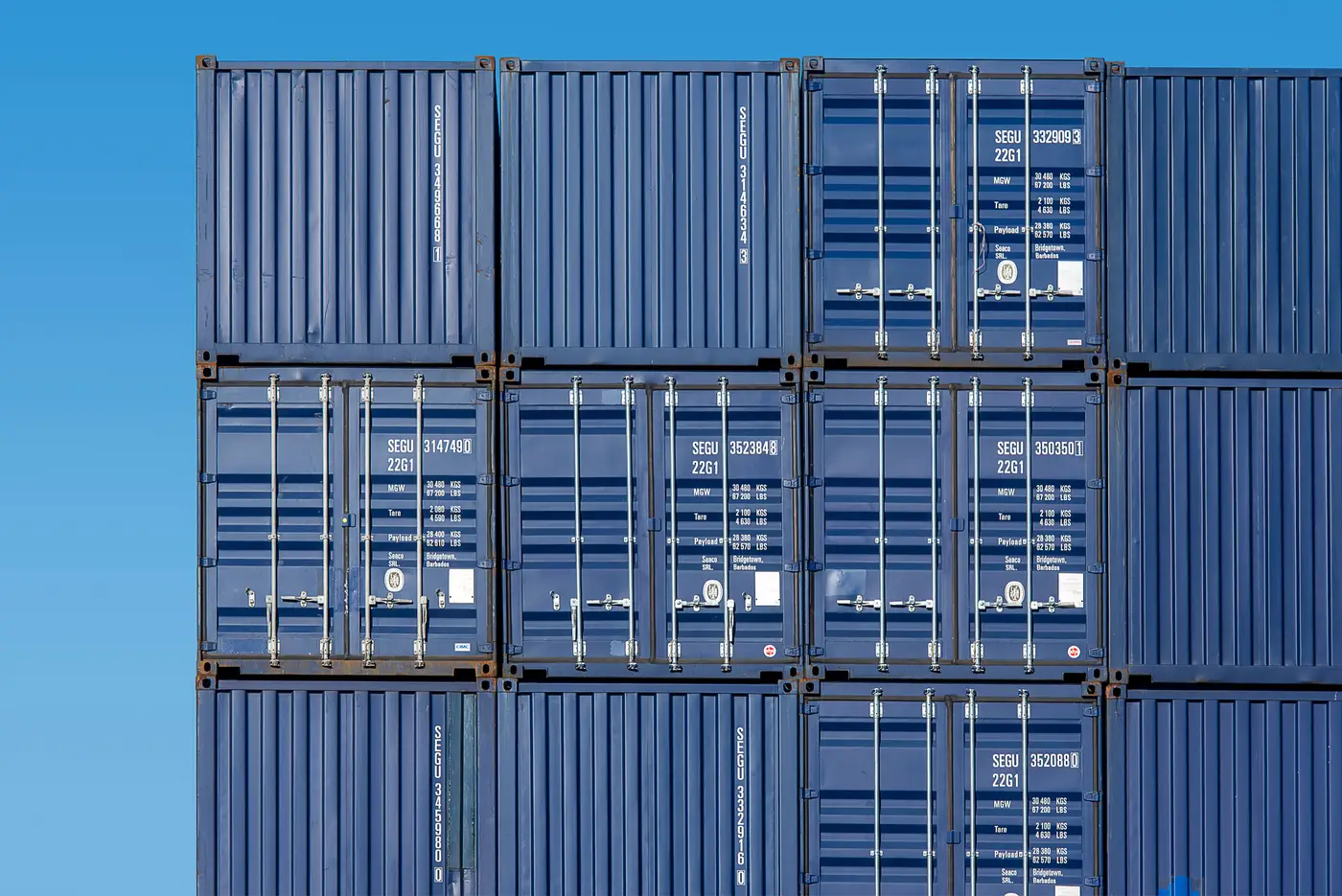
Anyone who has sat through a port authority's monthly statistics briefing has heard the two terms used almost interchangeably: TEU and box count. They are not the same measurement, and mixing them up is how a yard planner ends up surprised by how full a block is.
TEU is a volume unit, not a box
TEU stands for twenty-foot equivalent unit, a way of normalizing container volume so a terminal, a line, or a national statistics office can add up cargo moved without caring about physical box size. A standard 40-foot container counts as 2 TEU, a 20-foot container counts as 1 TEU, and a 45-foot high-cube also counts as 2 TEU under most reporting conventions despite being longer than the standard 40-footer.
Trade economists use that conversion to track volume trends year over year, since it lets them add dissimilar box sizes into one tidy figure. A yard planner trying to figure out how many physical boxes are sitting on a stack today needs a different number: TEU throughput counts lifts multiplied by a size factor, while a box count tallies discrete units. A terminal that handles mostly 40-footers will report a much higher TEU number than one handling the same count of real boxes moved in 20-foot units. Two terminals can post identical TEU throughput while one is running a yard with twice as many physical containers to track, stack, and move.
Official port statistics also report TEU as a monthly or quarterly aggregate, usually weeks after the period closes. A June release covering May volumes is normal, which suits a quarterly earnings call but tells an analyst almost nothing about whether block B14 is at 95% capacity this Tuesday.
Box count is what's physically on the ground
Box count is the number of discrete containers, full stop. It measures occupied slots directly, independent of TEU conversion factors. A yard planning team needs this number at a much finer grain than a port's published statistics ever provide: boxes per bay, per block, per stack height, updated daily rather than monthly.
In practice the two numbers come from different systems entirely. A terminal's own TOS knows its box count internally, in real time, for its own stacks. What it generally can't tell an analyst is what's happening on a competing terminal, a transshipment hub three time zones away, or a yard where the operator doesn't share data. Port throughput statistics, built on TEU, aren't a substitute either, since they roll up the whole port's flow into one trade-volume number with no block-level detail and no daily cadence.
AIS data fills part of that gap by showing vessel calls and dwell times, but a ship at berth doesn't tell you how many boxes got discharged versus how many are waiting for their next move. None of the standard sources, official TEU releases, AIS tracking, or a competitor's own reporting, answer the specific question a capacity analyst needs answered: how many boxes are stacked in this yard, in this block, right now.
Reading the two numbers together
When a capacity analyst needs a daily read on utilization, the practical approach is to treat TEU statistics as the trade-volume backdrop and box count as the operational signal. TEU tells you whether overall cargo flow through a port is trending up or down over a season. Box count tells you whether a specific block is filling up this week, whether dwell time is stretching because inbound boxes aren't clearing fast enough, or whether a competitor's yard is running tighter than the official monthly release would suggest.
Getting that box count without waiting for an official release, and without depending on an operator sharing their own TOS data, means counting what's physically stacked from the outside. Container Counting does exactly that, turning very-high-res satellite or aerial imagery into a box count per block or bay, exportable daily rather than once a month.
If a daily box count would change how your team plans around utilization, that's the gap this is built to close.