Static capacity vs throughput capacity: what actually caps a terminal
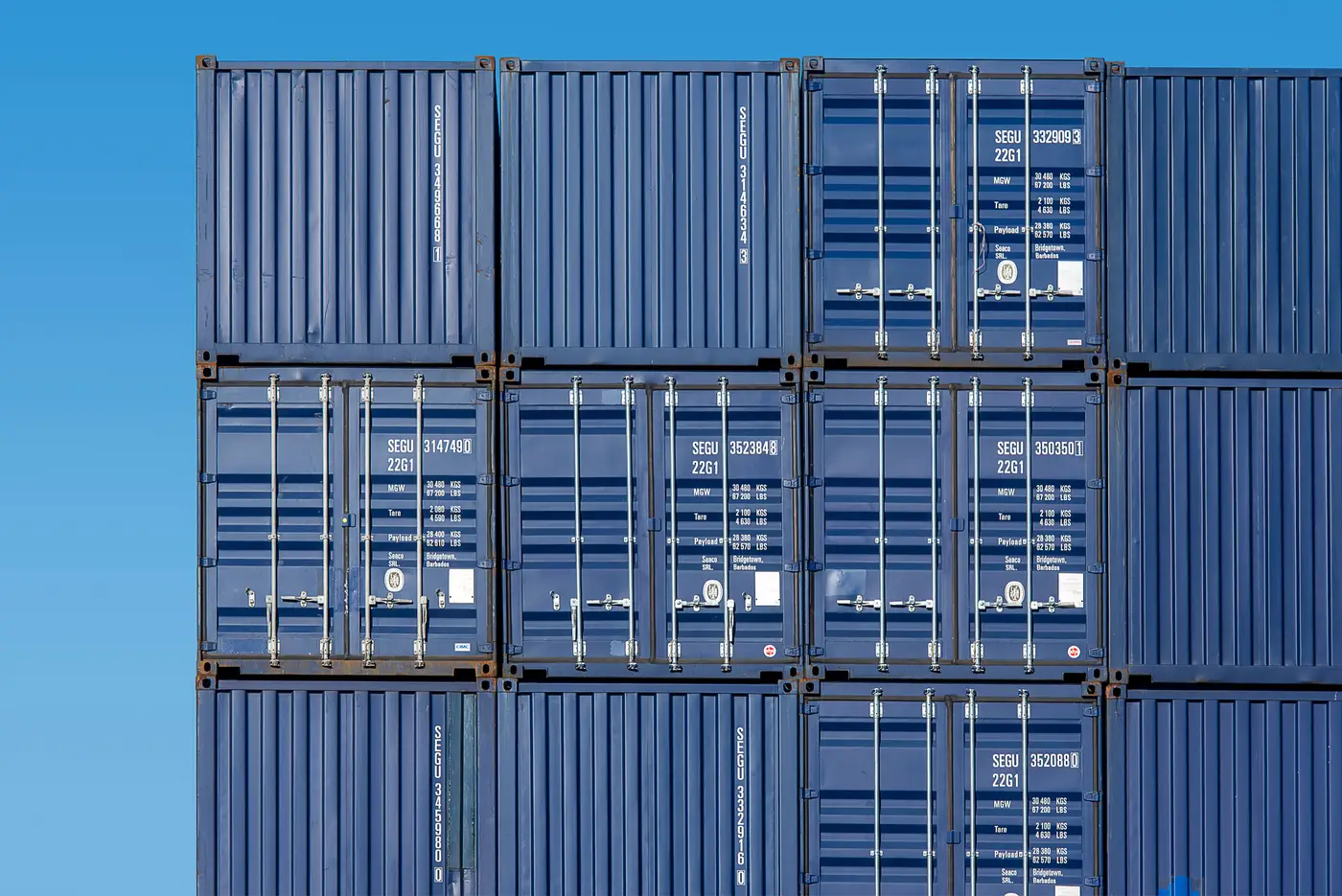
Terminal planners field the same question from three different directions. The board wants a TEU/year figure for a five-year capex plan. Operations wants to know if the yard can absorb next month's vessel calls. The port authority wants a number for its own annual statistics. These are not the same number, and treating them as interchangeable is where most capacity arguments go sideways.
Static capacity counts slots, not flow
Static capacity is the easiest of the three to calculate and the easiest to misread. Take your ground slots, multiply by the stacking height you run (3-high on reefer rows, maybe 5-high in the import stacks), and you get a TEU figure for the yard at full occupancy. That's a snapshot of storage, not a measure of how fast boxes move through it.
The trouble starts when that static number gets quoted as if it described throughput. A yard with 40,000 TEU of ground slots doesn't move 40,000 TEU a day, or anywhere near it. It moves whatever volume clears the gate and the stacks at the dwell time your import and export mix produces. Static capacity tells you how much box inventory the yard can physically hold before you run out of ground slots. It says nothing about turns.
Design capacity is a planning figure, not a working ceiling
Nominal or design capacity is the number in the master plan: a theoretical annual throughput built from berth length, quay crane productivity assumptions, and yard design parameters, usually anchored to a target occupancy and a design-year dwell time. It's a fine number for justifying a new berth or a yard expansion to a lender or a board. It's a weak tool for answering "can we take this ship next Tuesday."
Design capacity assumes an average that real operations rarely sit at. Dwell time moves with trade lane mix and customs holds. Peak-to-average ratios on monthly volume can run well above the flat annual rate the design study used. Equipment comes out for maintenance on a schedule the master plan never modeled. The gap between design capacity and achieved throughput is where most of the interesting planning questions live, and it tends to be wider than the design study implies.
Where the real ceiling sits
The real ceiling on most terminals sits well below both of those numbers, at the occupancy level where reshuffling, blocked stacks, and longer truck turn times start eating into berth productivity. Cross that point, and every extra box in the yard slows down the ones that need to move, so effective throughput falls even though the yard's rated capacity hasn't changed at all.
That's the gap an analyst needs to track day to day: how close the yard is running, block by block, against the ceiling that matters this week rather than the theoretical figure sitting in the master plan. Official monthly TEU releases confirm where things ended up. They don't show you which blocks are already past the point where congestion compounds, or how fast they got there.
Container Counting gives you that read directly: a daily box count per block and bay, pulled from very-high-res satellite or aerial imagery, so yard occupancy shows up on your desk before the terminal's own statistics are published, not after.
If you want that count before the official release lands, that's the gap worth closing first.