How to estimate vessel turnaround time from satellite imagery
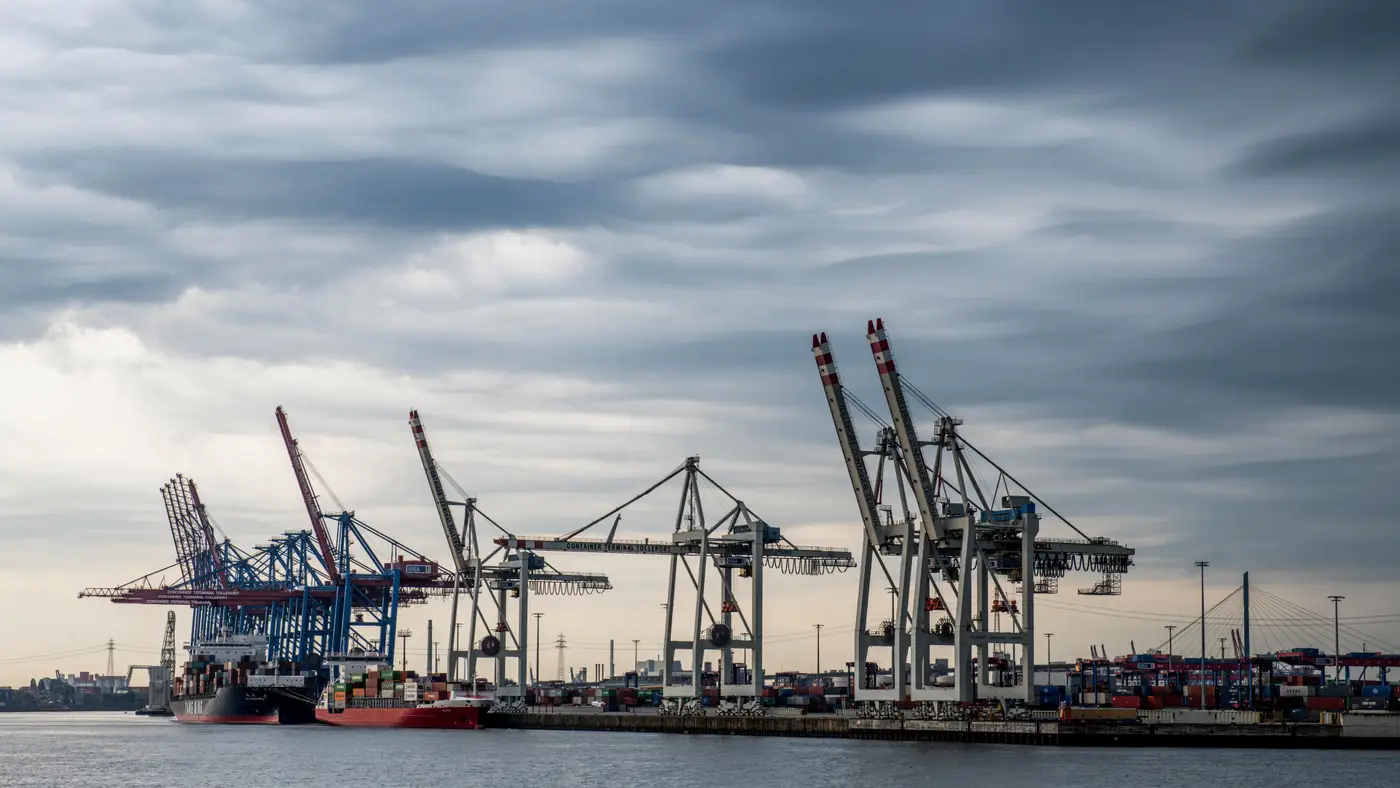
Turnaround time, call it berth-to-berth or arrival-to-sailing, is the number every terminal planner wants a week before anyone will hand it to you officially. Port authority statistics lag by a month. AIS gives you position and speed, not whether a vessel is working cargo or just sitting idle at the berth waiting on a pilot. Satellite imagery fills a specific gap: it shows you what's physically at the quay, on a given day, whether or not the vessel is broadcasting anything useful.
Imagery doesn't give you turnaround time directly. It gives you occupancy snapshots, and turnaround time is something you build out of those snapshots, pass by pass.
What a single pass tells you
A vessel call breaks into pieces: approach, berthing, working time (cranes moving boxes), idle time at berth (weather, labor gaps, waiting on feeder connections), and unberthing. From a single satellite pass you get one frame of that sequence, a vessel either present at a named berth or not. You can't see crane cycles from a still image taken once a day. What you can see, reliably, is whether berth 4 had a ship alongside on Tuesday and whether it still did on Wednesday.
So the estimate you're building isn't "this vessel took 31 hours to turn around." It's closer to: this berth showed vessel occupancy across three consecutive daily passes, call it a two-to-three day dwell, bounded by the first pass showing the vessel present and the first subsequent pass showing the berth clear. That's a real number, but it has the resolution of your revisit rate baked into it. Daily imagery gives you turnaround time to the nearest day. Twice-daily gives you half that. There's no imagery product that hands you hour-level berth-to-berth timing, and anyone telling you otherwise is selling AIS dressed up as something else.
Reading berth occupancy off a single image
Berth occupancy from imagery is really a counting problem before it's a timing problem. You need to know, pass by pass, which named berths are occupied and which are empty. In practice that means cross-referencing vessel position against a berth polygon you've drawn once for the terminal, not re-identifying the quay layout every time. Bulk carriers and container ships read differently at this resolution: length, beam, and the presence of container stacks on deck are usually enough to tell a loaded boxship from a bulker or a tanker tied up at an adjacent berth.
The harder case is a vessel shifted mid-call, moved off one berth to anchorage and back for weather, or a feeder swapped in ahead of the mother vessel at the same slot. A single daily pass can misread that as two separate calls or miss a short dwell entirely. Vessel dwell at berth satellite estimates are only as good as your revisit cadence, and that limit is worth stating plainly rather than papering over.
Stitching passes into a turnaround estimate
Once you have occupancy flagged per berth per day, turnaround time comes from counting consecutive occupied days and bracketing them with the last clear day before and the first clear day after. Run that across every berth at the terminal for a few weeks and you get a working average turnaround by berth, by vessel class, that you can compare week over week without waiting on anyone's monthly release.
For planning purposes, the trend matters more than any single-vessel number. If average dwell on the deep-water berths is creeping up pass over pass while box counts on the quay climb, you're watching congestion build in near real time, days before utilization numbers would confirm it through official channels.
That's the same underlying read Container Counting delivers daily: a box count per block and bay off VHR imagery, exportable as CSV or a map layer, built for this kind of early-read planning work rather than for the eventual official tally.
If you're already pulling daily passes for occupancy and dwell, it's worth seeing what a daily box count per bay adds to the same read.