Empty container depot vs container terminal: spotting the difference
As a capacity analyst, you've probably pulled up an unfamiliar facility in satellite imagery and had a moment where it isn't obvious if it's a terminal or a depot. The two get lumped together in a lot of planning conversations, but they behave differently in the data and they look different from above once you know what to check.
Why the distinction matters
A container terminal handles vessels. A depot handles boxes between moves, mostly empties waiting for their next booking or coming off lease for inspection and repair. If you're tracking throughput, utilisation, or where off-dock storage is absorbing overflow from a congested port, mixing the two up skews your read. A depot filling up tells you something about empty repositioning and equipment imbalance. A terminal yard filling up tells you something about vessel bunching or landside pickup delays. Different signal, different response.
The tells that actually work in imagery
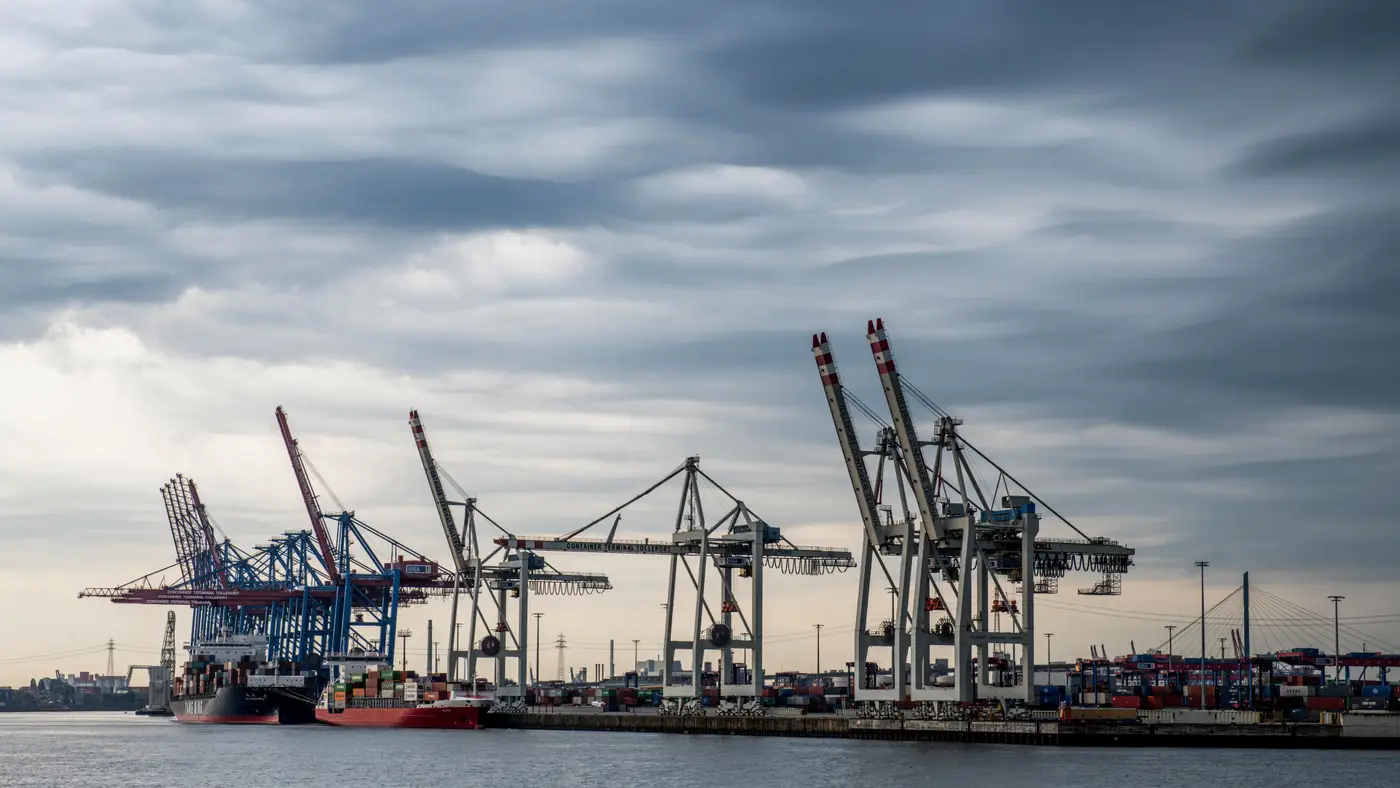
Start with the water. A terminal has a quay wall and, almost always, ship-to-shore gantry cranes sitting on rail along that wall. If there's no berth and no gantry cranes in the frame, you're not looking at a terminal, full stop. Depots sit inland or set back from the waterline, sometimes miles from the nearest berth, often tucked next to a rail yard or along a highway corridor where trucking is cheap.
Look at the equipment next. Terminals run RTGs or RMGs in long straddling rows over the stacks, or straddle carriers threading between blocks. Depots mostly run reach stackers and empty handlers, smaller, mobile equipment that doesn't need the overhead gantry structure. If the yard is dotted with individual mobile units rather than gantries spanning the blocks, lean depot.
Stack height and uniformity are the giveaway most people miss. Laden boxes in a terminal yard typically stack four to five high because weight and safe handling limit it, and the blocks are mixed in height depending on what's booked and what's waiting for pickup. Empty boxes stack much higher, six, seven, sometimes eight high, because there's no cargo weight to worry about. In imagery this shows up as tall, uniform block shadows and a dense footprint for the same ground area. A yard where every block is the same height and color-coded by line, all the same carrier's boxes stacked together, is almost always an empty depot, not a working terminal.
Color patterning helps too. Depots tend to segregate by owner or lessor, so you'll see long runs of one color, one box type, repeated down a bay. Terminal yards are messier by design: laden boxes from a dozen shippers and several carriers get stacked wherever the yard plan puts them that week, so the color mix looks more random from above.
Size and layout round it out. Terminals need marshalling space near the berth for pre-stowage and vessel work, plus a gate complex sized for the truck volume a vessel call generates. Depots are usually smaller, simpler rectangles of stacked blocks with a gate on one or two sides and no marshalling apron, because there's no vessel schedule driving the yard plan.
Where this gets useful
None of these tells require ground truth or a site visit. Once you can separate depot from terminal reliably in a frame, you can start tracking off-dock storage pressure the same way you'd track berth utilisation, by counting boxes in the stacks over time rather than waiting for a port authority to publish a monthly TEU figure that's already six weeks stale. A daily box count pulled from VHR imagery turns that visual read into an actual number per block or bay, which is a lot more useful when you're trying to explain to ops why the depot three miles up the highway is suddenly full of empties.
If you're doing this kind of identification work regularly across multiple sites, it's worth seeing what a daily, exportable count per block looks like instead of eyeballing shadows frame by frame. Have a look at what Container Counting puts out.